Annotation
- Introduction
- WASM Runtime Transition
- File System Enhancements
- Kotlin Integration and Performance
- Pros and Cons
- Conclusion
- Frequently Asked Questions
TrailBase 0.19: WASM Runtime, Kotlin Client & File API Updates
TrailBase 0.19 introduces a WASM-only runtime, Kotlin client, and file API updates, enhancing security and scalability for modern backend development.
Introduction
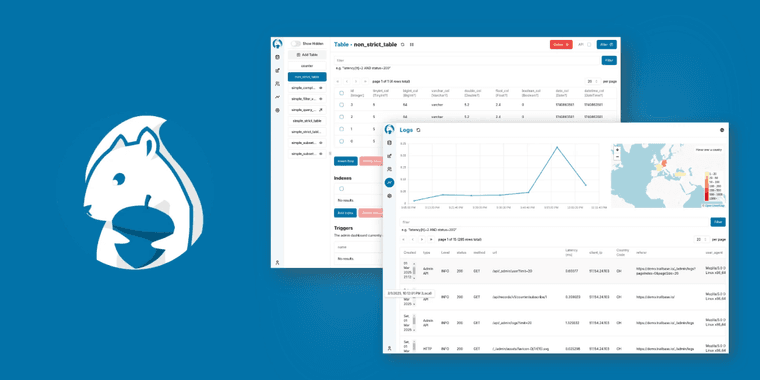
TrailBase 0.19 represents a significant evolution for this open source Firebase alternative, introducing WebAssembly-exclusive runtime support alongside a new Kotlin client and substantial file API improvements. This release marks a strategic shift toward modern web standards while maintaining the platform's commitment to type-safe REST and real-time APIs that developers rely on for scalable applications.
WASM Runtime Transition
The most notable change in TrailBase 0.19 is the complete transition to WebAssembly (WASM) as the default execution environment, replacing the previous V8 runtime. This architectural shift enables better performance consistency across different deployment scenarios while providing enhanced security through sandboxed execution. While custom binary builds can temporarily restore V8 support, the development team confirms this is a transitional measure before full removal in future versions. The move to WASM-only execution aligns with modern web development trends and offers improved resource management for applications requiring reliable local web server performance.
File System Enhancements
TrailBase 0.19 introduces breaking changes to file handling by eliminating index-based file reads in favor of unique filename conventions. The new system generates filenames using patterns like {original_stem}_{rand#10}.{suffix}, effectively resolving stale cache issues that previously affected read-after-write operations. This improvement benefits developers working with persistent file storage and enhances data integrity across distributed systems. The changes also complement the platform's strengthened API client capabilities, providing more reliable file management for applications requiring robust data persistence.
Kotlin Integration and Performance
A major addition in this release is the official Kotlin client, expanding TrailBase's language support beyond existing options. The new client provides native Kotlin coroutines support and seamless integration with Android and JVM ecosystems, making it a valuable developer tool. Performance improvements extend to the reworked WASM execution model, which now supports component sharing of executors and implements work stealing for better resource utilization. These enhancements make TrailBase particularly valuable for teams using build tool pipelines and CI/CD tool workflows that demand consistent execution performance.
Pros and Cons
Advantages
- WASM-only runtime improves security and portability
- Official Kotlin client expands development ecosystem
- Enhanced file system resolves cache consistency issues
- Improved executor model boosts scalability
- MUSL Linux builds offer better deployment flexibility
- Stronger access rule validation increases security
- Record subscription filters enable precise data streaming
Disadvantages
- Breaking file API changes require migration effort
- V8 runtime removal may affect existing deployments
- Learning curve for developers new to WASM concepts
- Limited backward compatibility with older versions
Conclusion
TrailBase 0.19 delivers substantial architectural improvements that position it as a forward-thinking application server and alternative to traditional backend services. The WASM-focused runtime, combined with the new Kotlin client and refined file handling, provides developers with a more robust and scalable platform for modern application development. While the breaking changes require careful migration planning, the long-term benefits of improved performance, security, and cross-platform compatibility make this update a worthwhile investment for teams building next-generation web applications with sophisticated REST client requirements and real-time data needs.
Frequently Asked Questions
What is the main change in TrailBase 0.19?
TrailBase 0.19 transitions to a WASM-only runtime, drops V8 support, introduces a Kotlin client, and implements breaking file API changes with unique filename conventions for better cache management.
Can I still use V8 with TrailBase 0.19?
V8 support is removed by default, but custom binary builds can temporarily re-enable it. However, complete V8 removal is planned for future versions, so migration to WASM is recommended.
How does the new file system handle filenames?
The new system uses unique filename patterns like {original_stem}_{rand#10}.{suffix} to prevent cache issues and ensure data integrity across read-after-write operations.
What performance benefits does WASM provide?
WASM offers sandboxed execution, better resource management, and consistent performance across platforms, improving scalability and security for applications.
Is the Kotlin client compatible with Android?
Yes, the Kotlin client seamlessly integrates with Android and JVM ecosystems, supporting coroutines for efficient asynchronous programming and modern development.
Relevant AI & Tech Trends articles
Stay up-to-date with the latest insights, tools, and innovations shaping the future of AI and technology.
Stoat Chat App: Complete Guide to Revolt Rebranding and Features
Stoat chat app rebranded from Revolt due to legal pressures, maintaining all user data, features, and privacy focus without any required actions from existing users for a seamless transition.
Zorin OS 18: Modern Linux OS with Windows App Support & New Features
Zorin OS 18 is a Linux distribution with a redesigned desktop, enhanced Windows app support, and web apps tool, ideal as a Windows 10 alternative with long-term support until 2029.
AV Linux 25 & MX Moksha 25 Released with Enhanced File Manager & VM Features
AV Linux 25 and MX Moksha 25 are new Linux releases based on Debian Trixie, featuring enhanced file management with Quickemu and YT-DLP integration, tailored for multimedia production and lightweight computing.