Annotation
- Introduction
- The Rise of AI in Software Testing
- Current Role of AI in QA and Automation
- AI's Impact on Job Market Trends
- Essential Skills for the AI-Driven QA Landscape
- Career Development for New QA Professionals
- Project-Based Learning for Junior QA Engineers
- Building a Compelling Professional Profile
- Integrating Generative AI into QA Workflows
- Practical Implementation of Generative AI
- Understanding AI Tool Investment and Training Costs
- Pros and Cons
- Conclusion
- Frequently Asked Questions
AI in Software Testing 2025: Complete Guide to Tools, Skills & Career Impact
AI is revolutionizing software testing in 2025, enhancing efficiency with automation tools and requiring new skills for QA professionals.
Introduction
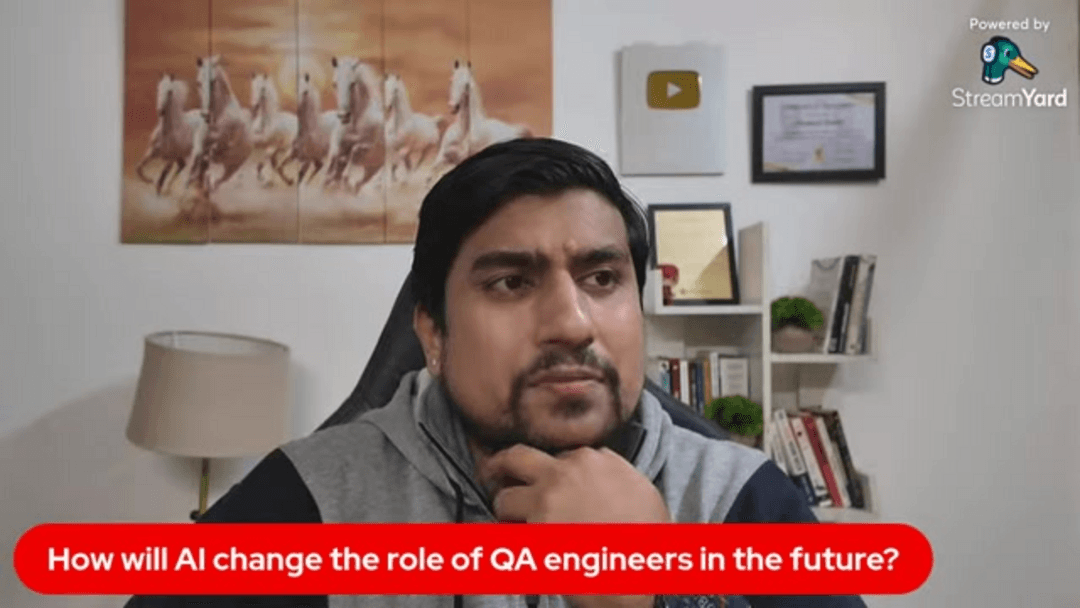
Artificial intelligence is fundamentally reshaping software testing methodologies, creating new opportunities and challenges for quality assurance professionals. This comprehensive 2025 guide examines how AI technologies are enhancing testing efficiency, accuracy, and coverage while transforming career requirements. We'll explore essential tools, emerging skills, and practical strategies for integrating AI into your testing workflow effectively.
The Rise of AI in Software Testing
Current Role of AI in QA and Automation
AI's integration into quality assurance represents a significant evolution rather than a complete revolution. Current applications focus on enhancing existing automation frameworks with intelligent capabilities. AI-driven solutions now automate repetitive testing tasks, generate realistic test data, and predict potential failure points before they impact production systems. This technological advancement requires QA engineers to develop new competencies while maintaining expertise in established AI testing QA methodologies.
The transition toward AI-enhanced testing doesn't eliminate the need for traditional automation skills. Proficiency with tools like Selenium, Appium, and Playwright remains crucial, as these platforms increasingly incorporate AI features. Understanding how to leverage AI automation platforms alongside conventional testing frameworks represents the new industry standard.
Programming knowledge in Python or Java continues to be essential, serving as the foundation for developing and customizing AI testing solutions. These languages enable testers to create sophisticated automation scripts that integrate with machine learning models and AI services effectively.

AI's Impact on Job Market Trends
The integration of AI into software testing has generated concerns about job displacement, but the reality is more nuanced. While AI automates certain manual testing tasks, it simultaneously creates demand for specialists who can design, implement, and maintain AI-driven testing systems. The industry isn't eliminating QA positions but rather transforming them into more technically advanced roles.
Companies increasingly seek professionals who can bridge the gap between traditional testing methodologies and emerging AI technologies. This shift emphasizes the importance of continuous learning and adaptation. As organizations implement AI agents and assistants into their development pipelines, testers who understand these systems gain significant career advantages.
Recent industry analyses suggest that AI may reduce certain manual testing roles over the next five years while simultaneously creating new opportunities in AI testing strategy, prompt engineering, and test automation architecture. This evolution mirrors previous technological shifts where automation created more specialized, higher-value positions.

Essential Skills for the AI-Driven QA Landscape
Thriving in the evolving QA field requires developing a balanced skill set that combines traditional testing expertise with AI competencies. Key areas of focus include:
- Prompt Engineering: This emerging discipline involves crafting precise instructions for AI models to generate relevant test cases, data, and validation scenarios. Effective prompt engineering requires understanding how different AI models interpret instructions and adjusting your approach accordingly.
- Automation Testing Tools Mastery: Deep knowledge of Selenium, Playwright, and Appium remains essential, but now includes understanding how to integrate these tools with AI capabilities for enhanced test generation and execution.
- Programming Proficiency: Python and Java continue to be the dominant languages for test automation, with Python particularly valuable for its extensive AI and machine learning libraries that facilitate AI API integration.
- AI and Machine Learning Fundamentals: Understanding basic ML concepts helps testers collaborate effectively with data scientists and AI specialists while ensuring testing strategies align with model capabilities and limitations.

Career Development for New QA Professionals
Project-Based Learning for Junior QA Engineers
For those beginning their QA careers, practical project experience demonstrates competency more effectively than theoretical knowledge alone. A strong portfolio should include diverse testing projects that showcase both manual and automated testing capabilities. Consider developing projects that highlight:
- Comprehensive manual testing portfolios documenting test cases, execution results, and defect tracking
- Automation frameworks demonstrating proficiency with key testing tools and programming languages
- Integration projects showing how traditional testing approaches combine with AI capabilities
- Performance testing scenarios that validate system behavior under various load conditions
These projects not only build technical skills but also develop the problem-solving abilities essential for modern QA roles. Incorporating CI/CD tools into your projects demonstrates understanding of contemporary development workflows.

Building a Compelling Professional Profile
Standing out in the competitive QA job market requires more than technical skills alone. Developing a strong professional presence involves strategic networking and continuous skill development. Key strategies include:
- Creating clean, well-organized resumes that highlight both technical competencies and project achievements
- Actively participating in testing communities and professional organizations to build connections
- Clearly communicating your specialized skills and career objectives to recruiters and hiring managers
- Regularly attending industry webinars, workshops, and training sessions to stay current with emerging trends
Integrating Generative AI into QA Workflows
Practical Implementation of Generative AI
Generative AI offers transformative potential for software testing, particularly in areas like test case generation, data creation, and documentation. Effective implementation begins with mastering prompt engineering – the art of crafting instructions that guide AI models to produce useful testing artifacts. This skill becomes increasingly important as organizations adopt AI prompt tools for quality assurance.
A structured approach to prompt development yields the best results. Start with simple, direct prompts to establish baseline performance, then progressively refine your instructions based on output quality. Incorporating examples within your prompts often significantly improves result relevance and accuracy.
Iterative improvement represents the most effective strategy for prompt optimization. Analyze AI responses carefully, identify patterns in successful outputs, and continuously adjust your prompting techniques. This systematic approach transforms basic prompts into precise instructions that generate high-quality testing materials.
Understanding AI Tool Investment and Training Costs
Implementing AI in testing workflows involves both financial and time investments. While many AI tools offer free tiers or open-source versions, enterprise-grade solutions typically require subscription fees or licensing costs. Organizations must balance these expenses against potential efficiency gains and quality improvements.
Training represents another significant investment. Developing AI testing expertise requires dedicated learning time and potentially formal training programs. However, these costs often prove worthwhile given the substantial productivity improvements and defect reduction achievable through well-implemented AI testing strategies.

Pros and Cons
Advantages
- Significantly reduces manual testing time through intelligent automation
- Enhances test coverage by generating diverse test scenarios automatically
- Improves defect detection accuracy with predictive analytics capabilities
- Accelerates test data generation for complex testing requirements
- Enables continuous testing integration within DevOps pipelines
- Reduces human error in repetitive testing tasks through automation
- Provides valuable insights through test analytics and reporting features
Disadvantages
- Requires substantial initial investment in tools and training programs
- Demands continuous learning to keep pace with rapidly evolving technology
- May produce false positives that require manual investigation and validation
- Limited effectiveness for testing subjective user experience elements
- Potential job displacement for manual testing specialists unwilling to adapt
Conclusion
AI represents a transformative force in software testing, creating both challenges and opportunities for quality assurance professionals. Success in this evolving landscape requires balancing traditional testing expertise with emerging AI competencies. By developing skills in prompt engineering, automation tools, and AI integration, testers can position themselves for continued relevance and career growth. The future of QA lies not in resisting technological change but in embracing AI as a powerful ally in delivering higher-quality software more efficiently. Organizations and individuals who invest in developing these capabilities today will lead the industry transformation tomorrow.
Frequently Asked Questions
Should I be concerned about AI taking QA jobs?
AI is transforming QA roles rather than eliminating them. While automating some manual tasks, AI creates new opportunities in test strategy, AI tool management, and automation architecture. Professionals who adapt by learning AI testing skills will remain highly employable.
What programming languages are most important for AI testing?
Python and Java remain essential for AI testing. Python is particularly valuable due to its extensive AI/ML libraries and simplicity, while Java's strong enterprise presence makes it important for many organizations. Both enable effective test automation and AI integration.
How quickly can I learn AI testing skills?
Basic AI testing competencies can be developed in 2-3 months with focused learning. Mastering advanced AI testing techniques typically requires 6-12 months of practical experience. Starting with prompt engineering and existing automation tools provides the fastest entry path.
What are the best AI testing tools for beginners?
For beginners, start with AI-enhanced versions of Selenium or Playwright, and explore tools like Testim or Applitools that integrate AI for visual testing. These tools offer user-friendly interfaces and gradual learning curves for effective AI adoption.
How does AI improve test automation frameworks?
AI enhances test automation by automatically generating test cases, optimizing test execution order, identifying flaky tests, and providing intelligent insights for maintenance. This leads to faster development cycles and more reliable software releases.
Relevant AI & Tech Trends articles
Stay up-to-date with the latest insights, tools, and innovations shaping the future of AI and technology.
Grok AI: Free Unlimited Video Generation from Text & Images | 2024 Guide
Grok AI offers free unlimited video generation from text and images, making professional video creation accessible to everyone without editing skills.
Top 3 Free AI Coding Extensions for VS Code 2025 - Boost Productivity
Discover the best free AI coding agent extensions for Visual Studio Code in 2025, including Gemini Code Assist, Tabnine, and Cline, to enhance your
Hirecarta AI Job Search Tool Review 2025 - Free Career Platform
Hirecarta is a free AI-powered job search platform that offers resume building, job matching, career coaching, and interview preparation to help