Annotation
- Introduction
- Key Performance Upgrades
- API Standardization and Migration
- Enhanced Customization Features
- Pros and Cons
- Conclusion
- Frequently Asked Questions
Gradio 6 Release: Faster Python ML Apps with Enhanced Performance
Gradio 6 significantly improves Python machine learning application development by offering faster performance, reduced package size, and enhanced customization options, but note the breaking changes that require migration.
Introduction
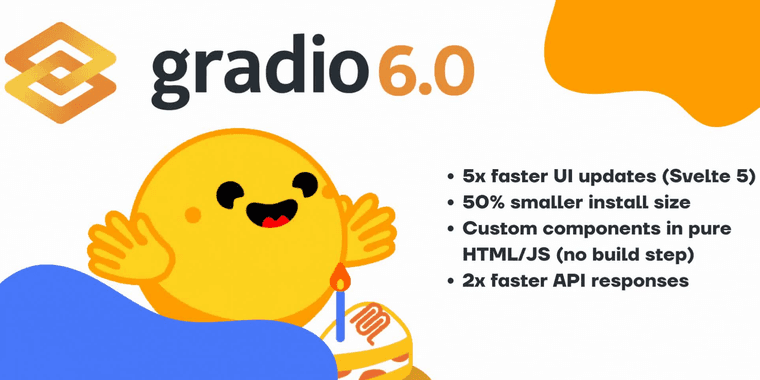
The latest Gradio 6 release transforms how Python developers build interactive machine learning applications. This update delivers significant performance improvements, reduced package size, and streamlined customization options for creating web-based ML demos.
Key Performance Upgrades
Gradio 6 introduces substantial speed enhancements for loading and running machine learning models through web interfaces. The framework now supports inline custom web components using pure HTML and JavaScript within Python scripts, eliminating dependency on external build tools. These improvements make it particularly valuable for AI model hosting and rapid prototyping workflows.
API Standardization and Migration
This version includes breaking changes as the development team works to standardize the Python API. Developers upgrading from previous versions should review migration documentation carefully. The simplified API structure aligns with modern AI APIs and SDKs practices while maintaining backward compatibility where possible.
Enhanced Customization Features
Beyond performance gains, Gradio 6 offers expanded customization capabilities. Developers can now create sophisticated interfaces without compromising on functionality, making it competitive with other static site generators for demo purposes. The framework integrates seamlessly with various API client tools and supports complex ML workflows.
Pros and Cons
Advantages
- Significantly faster loading for ML model interfaces
- Smaller package footprint reduces deployment complexity
- Inline custom components eliminate external dependencies
- Simplified API improves developer experience
- Better integration with existing Python ML ecosystems
- Active development and ongoing support commitment
Disadvantages
- Breaking changes require migration effort
- Limited backward compatibility with older projects
- Steeper learning curve for complex customizations
Conclusion
Gradio 6 represents a substantial step forward for machine learning application development in Python. With its performance optimizations and enhanced customization capabilities, it strengthens its position as a leading tool for creating interactive ML demos and prototypes. Developers working with AI automation platforms should consider upgrading to leverage these improvements.
Frequently Asked Questions
What are the main improvements in Gradio 6?
Gradio 6 delivers faster performance, smaller package size, simplified API, and inline custom web components without external build tools, making ML app development more efficient.
Is Gradio 6 backward compatible with previous versions?
No, Gradio 6 includes breaking changes to standardize the Python API, requiring developers to review migration guides and update existing projects accordingly.
What new features does Gradio 6 introduce?
Gradio 6 adds inline custom web components, reduced package size, and a simplified API for better performance and customization in machine learning app development.
How does Gradio 6 improve developer experience?
The simplified API and elimination of external build tools for custom components make it easier for developers to create and deploy ML applications quickly.
What should developers consider before migrating to Gradio 6?
Developers should review the migration documentation for breaking changes, assess compatibility with existing projects, and plan for updates to leverage new features.
Relevant AI & Tech Trends articles
Stay up-to-date with the latest insights, tools, and innovations shaping the future of AI and technology.
Stoat Chat App: Complete Guide to Revolt Rebranding and Features
Stoat chat app rebranded from Revolt due to legal pressures, maintaining all user data, features, and privacy focus without any required actions from existing users for a seamless transition.
Zorin OS 18: Modern Linux OS with Windows App Support & New Features
Zorin OS 18 is a Linux distribution with a redesigned desktop, enhanced Windows app support, and web apps tool, ideal as a Windows 10 alternative with long-term support until 2029.
AV Linux 25 & MX Moksha 25 Released with Enhanced File Manager & VM Features
AV Linux 25 and MX Moksha 25 are new Linux releases based on Debian Trixie, featuring enhanced file management with Quickemu and YT-DLP integration, tailored for multimedia production and lightweight computing.