Annotation
- Introduction
- Understanding AI Agents: From LLMs to Intelligent Action
- Large Language Models: The Foundation
- AI Workflows: Guiding LLMs Through Specific Tasks
- AI Agents: Autonomous and Adaptive Problem Solvers
- Retrieval Augmented Generation (RAG)
- Practical Learning Path for AI Agents
- Pricing of Mentioned Tools
- Core Features of AI Tools
- Use Cases for AI Tools
- Pros and Cons
- Conclusion
- Frequently Asked Questions
AI Agents Guide: From LLMs to Autonomous Systems Implementation
Explore the evolution of AI agents from LLMs to autonomous systems, covering ReAct framework, RAG implementation, and a practical development path
Introduction
Artificial Intelligence is advancing at an unprecedented pace, and AI agents represent the cutting edge of this transformation. These intelligent systems go beyond simple chatbots to become autonomous problem-solvers capable of reasoning, adapting, and executing complex tasks. This comprehensive guide explores how AI agents build upon large language models and workflows to create truly intelligent systems that can revolutionize how we approach automation and decision-making across industries.
Understanding AI Agents: From LLMs to Intelligent Action
Large Language Models: The Foundation
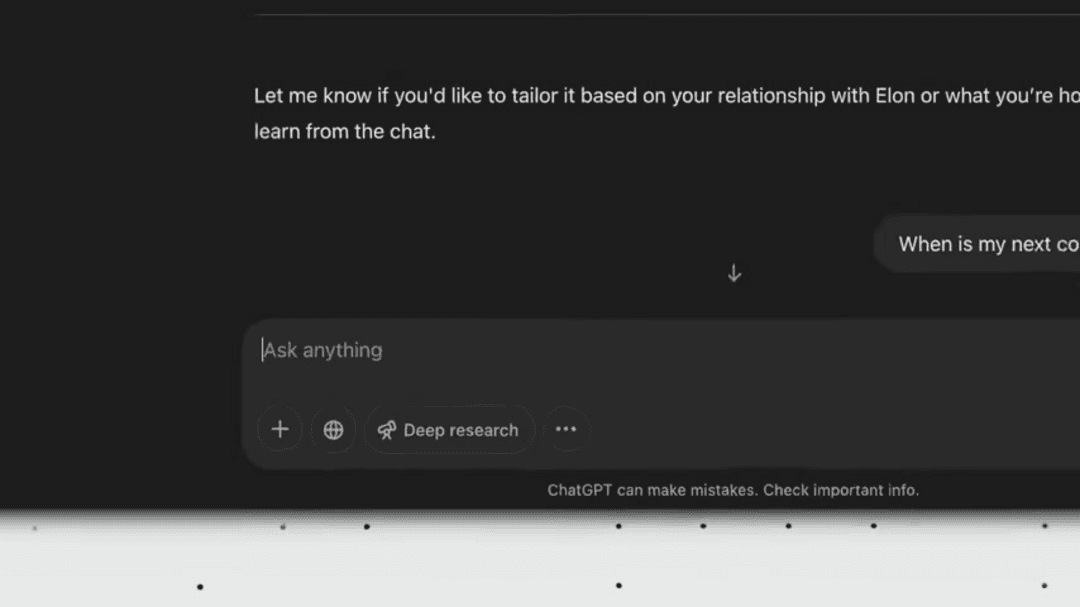
At the heart of modern AI agents lie Large Language Models (LLMs) – sophisticated neural networks trained on massive text datasets. Leading examples include ChatGPT, Google Gemini, and Claude, which excel at natural language understanding, text generation, and complex reasoning tasks. These models serve as the cognitive engine that enables AI agents to process information and communicate effectively.
LLMs provide the essential language processing capabilities that allow AI agents to interpret user requests, generate responses, and understand context. However, they operate primarily as reactive systems – waiting for prompts rather than initiating actions. This limitation becomes apparent when dealing with proprietary data or requiring real-time decision-making, which is where more advanced AI agents and assistants come into play.
AI Workflows: Guiding LLMs Through Specific Tasks
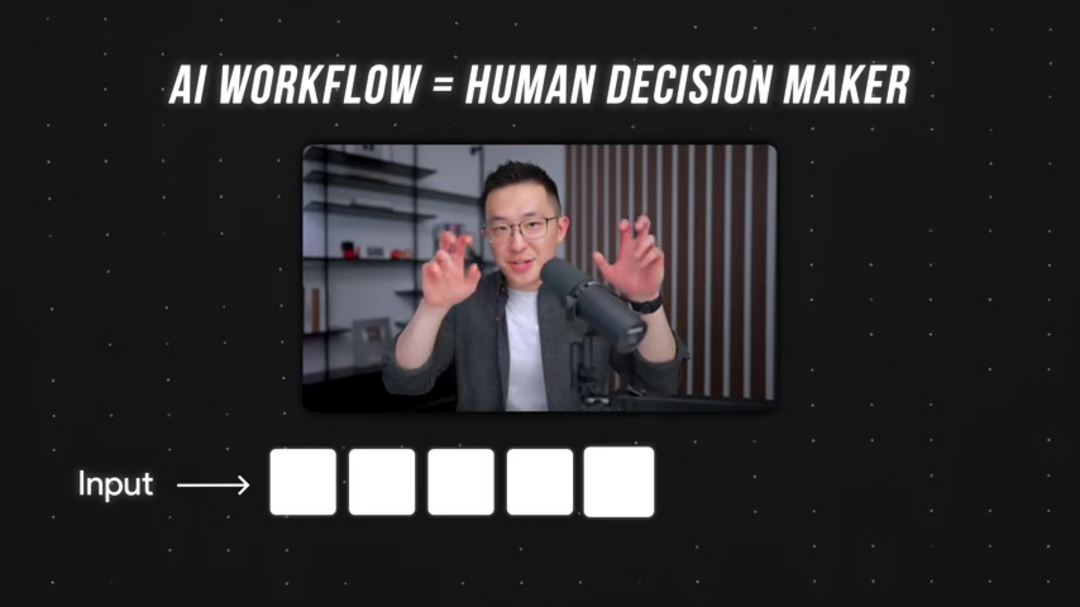
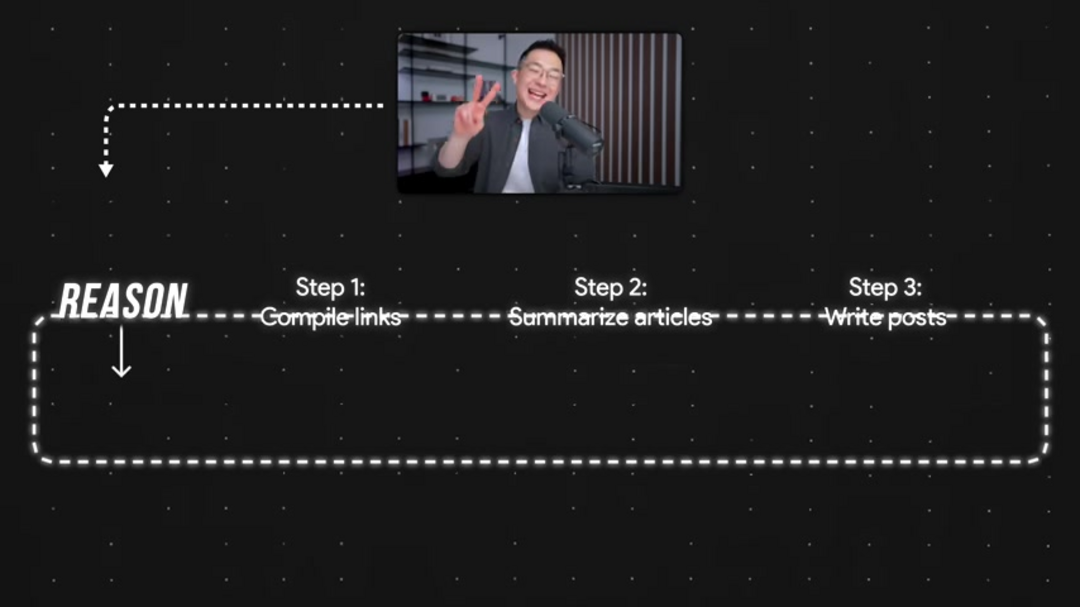
AI workflows represent the next evolutionary step, creating structured sequences that guide LLMs through multi-step processes. These workflows integrate external tools and data sources, enabling more sophisticated task automation. For instance, a social media management workflow might involve compiling news articles, summarizing content using tools like Perplexity AI, drafting posts with an LLM, and scheduling publication – all without manual intervention.
While workflows significantly enhance automation capabilities, they remain constrained by their pre-defined paths. The human programmer must specify each step in advance, limiting the system's ability to adapt to unexpected situations or optimize processes dynamically. This is where platforms specializing in AI automation platforms provide valuable infrastructure for building these complex sequences.
AI Agents: Autonomous and Adaptive Problem Solvers
AI agents represent the pinnacle of intelligent automation, combining LLM capabilities with autonomous reasoning and action. Unlike workflows that follow predetermined steps, AI agents receive high-level goals and independently determine the optimal path to achieve them. They continuously assess their environment, make decisions based on real-time feedback, and adapt their strategies as circumstances change.

The ReAct framework (Reasoning + Acting) exemplifies this approach, enabling agents to iteratively reason about situations and take appropriate actions. For example, an AI agent managing social media wouldn't just draft posts – it would analyze engagement metrics, identify best practices, and refine its content strategy autonomously. This level of sophistication makes AI chatbots and conversational interfaces increasingly powerful for customer interactions.
Retrieval Augmented Generation (RAG)
What is RAG?
Retrieval-Augmented Generation (RAG) addresses a critical limitation of standard LLMs: their inability to access current or proprietary information. RAG systems enable AI models to retrieve relevant information from external databases or knowledge bases before generating responses. This "look before you answer" approach ensures that responses are grounded in accurate, up-to-date information rather than relying solely on the model's training data.
RAG essentially functions as a specialized AI workflow that enhances the reliability and accuracy of AI systems. By integrating retrieval mechanisms, AI agents can provide more contextually relevant and factually correct responses, making them particularly valuable for applications requiring current information or domain-specific knowledge. This capability is crucial for developing advanced conversational AI tools that need to maintain accuracy across diverse topics.
Practical Learning Path for AI Agents
Level 1: Mastering LLMs
Begin your journey by developing proficiency with leading LLMs like ChatGPT, Google Gemini, and Claude. Experiment with different prompting techniques to understand how subtle variations in input affect output quality. Learn to leverage their capabilities for text generation, translation, summarization, and code generation. This foundational knowledge is essential before progressing to more complex AI systems and understanding how AI writing tools optimize content creation.
Level 2: Designing AI Workflows
Progress to designing automated sequences that integrate LLMs with external tools and data sources. Platforms like Make.com provide intuitive interfaces for creating multi-step workflows that combine AI capabilities with practical applications. Learn to structure processes that leverage different AI strengths while maintaining logical flow and error handling – skills that translate directly to working with AI prompt tools and automation frameworks.
Level 3: Building AI Agents
Advance to developing true AI agents using frameworks that support autonomous reasoning and action. Explore the ReAct framework and other architectures that enable systems to adapt to changing conditions. Experiment with different approaches to goal-setting, environment perception, and action selection. This level involves understanding how to deploy and manage AI model hosting solutions that support agent functionality.
Pricing of Mentioned Tools
Cost of Using These AI Tools
Understanding the financial implications of implementing AI solutions is crucial for planning and budgeting. Most AI tools operate on usage-based pricing models, with costs varying significantly based on volume and features required. ChatGPT offers tiered subscriptions from free access to enterprise plans, while Google Gemini pricing integrates with Google Cloud Platform services. Claude employs token-based billing, and Perplexity AI provides both free and premium tiers. Make.com follows a similar freemium model, with advanced automation features requiring paid subscriptions.
Core Features of AI Tools
Main Functions
Each AI tool brings distinct capabilities to the table. ChatGPT excels at text generation, translation, and code creation. Google Gemini stands out with multimodal processing of both text and images. Claude focuses on conversational AI and summarization tasks. Perplexity AI specializes in real-time information retrieval and search-enhanced responses. Make.com serves as an automation platform connecting various applications and services. Understanding these specialized functions helps in selecting the right tools for specific AI APIs and SDKs integration projects.
Use Cases for AI Tools
Typical Applications
AI agents and their underlying technologies find applications across numerous domains. Content creation benefits from automated blog posts and marketing materials. Customer service transforms through intelligent chatbots and virtual assistants. Data analysis becomes more accessible with automated insight generation. Software development accelerates through code generation and optimization. Research processes streamline with enhanced information retrieval and synthesis capabilities. These applications demonstrate the transformative potential of AI across business functions and industries.
Pros and Cons
Advantages
- Automates complex multi-step tasks requiring reasoning
- Significantly improves operational efficiency and productivity
- Enables data-driven decision-making with real-time adaptation
- Creates highly personalized user experiences and interactions
- Solves novel problems without pre-programmed solutions
- Reduces human error in repetitive cognitive tasks
- Scalable across multiple domains and applications
Disadvantages
- High development and implementation costs initially
- Ethical concerns around bias, transparency, and job impact
- Requires extensive, high-quality training datasets
- Complex integration with existing systems and workflows
- Potential security vulnerabilities in autonomous systems
Conclusion
AI agents represent a major advance in AI, evolving from reactive systems to autonomous problem-solvers. Built on large language models with advanced reasoning, they adapt to dynamic environments and achieve complex goals with minimal human input. As technology matures, AI agents will handle more nuanced tasks intelligently. Understanding LLMs and progressing through foundational concepts is key to leveraging AI's potential.
Frequently Asked Questions
What are AI agents and how do they work?
AI agents are autonomous systems that perceive their environment, reason about situations, and take actions to achieve specific goals. They combine large language models with decision-making capabilities to solve problems adaptively without following pre-programmed steps.
How do AI agents differ from standard chatbots?
While chatbots typically follow scripted conversations, AI agents can autonomously determine actions, adapt to new information, and pursue complex goals through reasoning and iterative improvement rather than just responding to immediate prompts.
What is the ReAct framework in AI agents?
The ReAct framework combines Reasoning and Acting, enabling AI agents to iteratively think through problems, plan actions, execute them, and refine approaches based on outcomes for more effective problem-solving.
How does RAG improve AI agent capabilities?
Retrieval-Augmented Generation allows AI agents to access external knowledge sources before responding, ensuring answers are based on current, accurate information rather than just pre-trained data, significantly enhancing reliability.
What are common real-world applications of AI agents?
AI agents power virtual assistants, autonomous vehicles, fraud detection systems, robotic process automation, personalized recommendation engines, and complex problem-solving applications across healthcare, finance, and customer service.
Relevant AI & Tech Trends articles
Stay up-to-date with the latest insights, tools, and innovations shaping the future of AI and technology.
Grok AI: Free Unlimited Video Generation from Text & Images | 2024 Guide
Grok AI offers free unlimited video generation from text and images, making professional video creation accessible to everyone without editing skills.
Grok 4 Fast Janitor AI Setup: Complete Unfiltered Roleplay Guide
Step-by-step guide to configuring Grok 4 Fast on Janitor AI for unrestricted roleplay, including API setup, privacy settings, and optimization tips
Top 3 Free AI Coding Extensions for VS Code 2025 - Boost Productivity
Discover the best free AI coding agent extensions for Visual Studio Code in 2025, including Gemini Code Assist, Tabnine, and Cline, to enhance your