Annotation
- Introduction
- Understanding the Core Technologies
- What Are Workflow Automations?
- What Are AI Agents?
- Practical Applications in Customer Support
- Billing Inquiry Handling with Workflow Automation
- Billing Inquiry Handling with AI Agents
- Cost Considerations and Pricing Models
- Pricing Comparison Table
- Implementation Challenges and Considerations
- Strategic Decision Framework
- Pros and Cons
- Conclusion
- Frequently Asked Questions
AI Agents vs Workflow Automation: Complete 2024 Comparison Guide
Explore the complete 2024 comparison between AI agents and workflow automation, including pros, cons, implementation tips, and real-world use cases
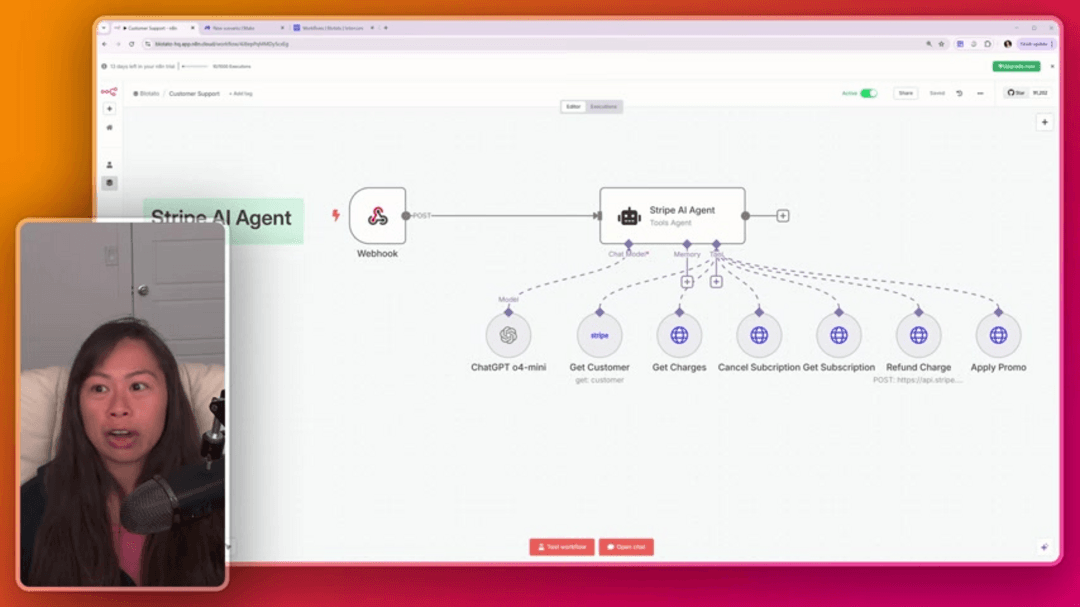
Introduction
In today's rapidly evolving business landscape, organizations face increasing pressure to optimize operations and reduce manual workloads. The emergence of sophisticated automation technologies has created a critical decision point: should businesses invest in traditional workflow automation or embrace the more advanced capabilities of AI agents? This comprehensive guide examines both approaches, highlighting their distinct characteristics, practical applications, and strategic implications for modern enterprises seeking competitive advantage through technological innovation.
Understanding the Core Technologies
What Are Workflow Automations?
Workflow automations represent the established foundation of business process optimization, functioning as systematic sequences of pre-defined actions triggered by specific conditions. These systems excel in environments where tasks follow predictable patterns and require consistent execution. The fundamental strength of workflow automation lies in its reliability for handling repetitive operations with minimal variation.
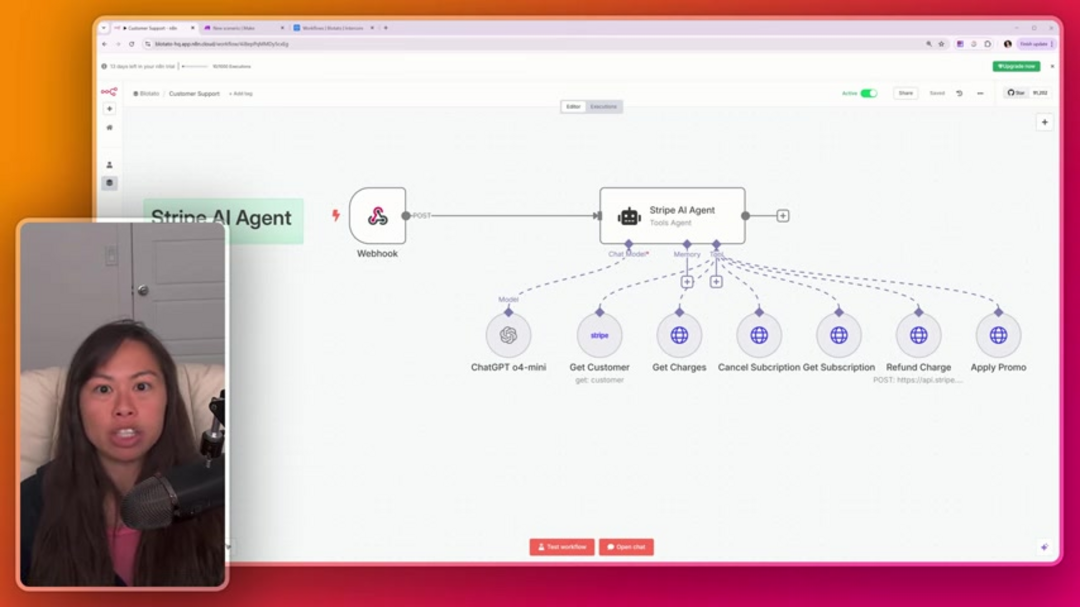
Popular platforms in the workflow automation space include Zapier, Make.com, n8n, and Pipedream, which enable businesses to connect various applications and services through pre-configured workflows. In enterprise contexts, this approach is often referred to as Robotic Process Automation (RPA), while small to medium businesses typically utilize more accessible workflow automation tools.
The primary limitation of traditional workflow automation becomes apparent when encountering unexpected scenarios. These systems operate within rigid parameters, meaning any deviation from the pre-programmed path requires human intervention. This brittleness can undermine efficiency gains, particularly in dynamic business environments where conditions frequently change.
What Are AI Agents?
AI agents represent a significant evolution in automation technology, incorporating machine learning and natural language processing to enable dynamic decision-making. Unlike their rule-based counterparts, AI agents can analyze complex situations, adapt their behavior based on context, and learn from previous interactions to improve performance over time.
The revolutionary aspect of AI agents is their ability to understand natural language instructions and dynamically plan appropriate actions. Instead of requiring developers to manually code every possible scenario, businesses can simply describe their objectives in plain English, and the AI agent will determine the necessary steps to accomplish the task. This includes the capacity to recover from errors and handle edge cases that weren't explicitly anticipated during initial configuration.
This adaptive capability makes AI agents particularly valuable for optimizing complex, variable processes where conditions frequently change. The technology represents a fundamental shift from static automation to intelligent, learning systems that become more effective with each interaction.
Practical Applications in Customer Support
Billing Inquiry Handling with Workflow Automation
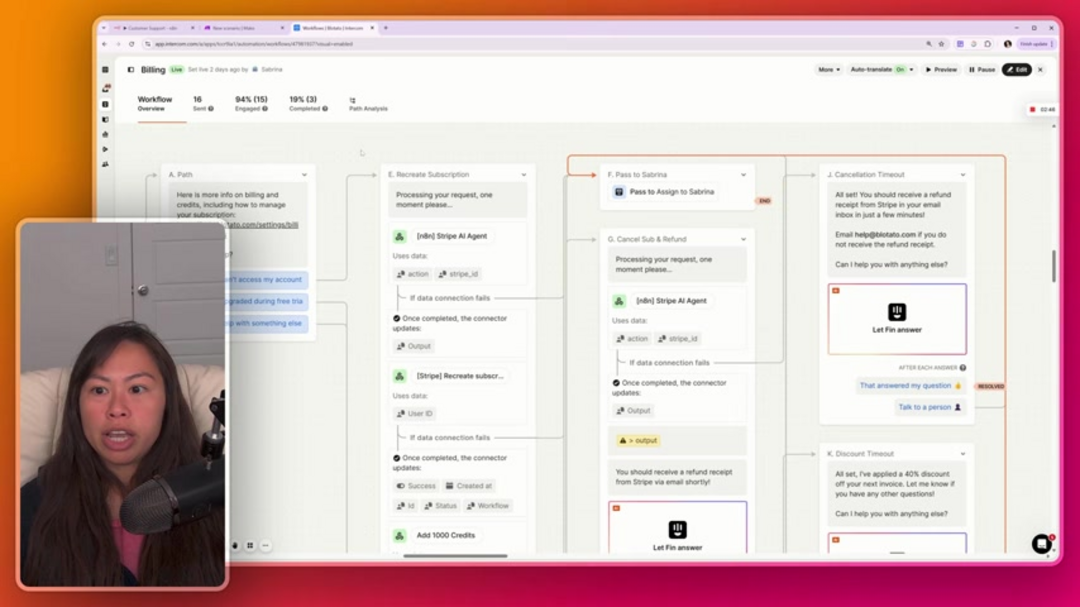
Consider a typical customer support scenario involving billing inquiries. With traditional workflow automation, businesses would implement predetermined paths for common questions. These might include automated responses for account access issues, explanations of free trial limitations and upgrade options, or directing users to refund processes.
While effective for routine queries that fit neatly into established categories, this approach struggles when customers present unique or complex situations. The system's inability to deviate from its programmed paths forces human agents to intervene, potentially creating bottlenecks and reducing the overall efficiency gains automation was meant to provide.
Billing Inquiry Handling with AI Agents
When a customer submits a billing inquiry, the AI agent analyzes the request, formulates an appropriate response strategy, and executes necessary actions. This dynamic approach might involve retrieving specific customer details from payment systems, examining recent charges and subscription status, determining if refunds are warranted based on company policies, and crafting personalized responses that address the customer's unique situation.
The AI agent's ability to adapt to novel scenarios ensures customers receive tailored solutions rather than generic responses. Furthermore, the system learns from each interaction, continuously improving its effectiveness in handling increasingly complex customer service situations.
Cost Considerations and Pricing Models
Pricing Comparison Table
| Feature | Workflow Automation | AI Agents |
|---|---|---|
| Initial Setup Costs | Generally lower due to established platforms | Potentially higher for custom implementation |
| Ongoing Monthly Costs | Scalable based on usage volume and features | Variable based on token consumption and infrastructure |
| Pay-As-You-Go Options | Widely available across most platforms | Increasingly common as technology matures |
| Maintenance Requirements | Regular updates needed for API changes | Continuous training and refinement recommended |
When evaluating business process automation solutions, it's crucial to consider both immediate and long-term financial implications. While workflow automation typically offers lower initial investment, AI agents may provide greater return on investment through reduced manual intervention and improved handling of complex scenarios.
Implementation Challenges and Considerations
Organizations considering AI automation platforms must address several critical implementation challenges. Establishing appropriate guardrails is essential to ensure AI agents operate within defined parameters and maintain brand consistency. Interoperability with existing systems represents another significant consideration, as seamless integration with current technology stacks is crucial for operational efficiency.
Cost-effectiveness remains a primary concern for many businesses, particularly when balancing the advanced capabilities of AI agents against their higher implementation costs. Organizations should conduct thorough cost-benefit analyses that consider both immediate expenses and long-term operational savings.
Strategic Decision Framework
Choosing between workflow automation and AI agents requires careful evaluation of specific business needs. Organizations should assess process complexity, variability of tasks, available technical resources, and budget constraints. For highly structured, repetitive tasks with minimal variation, traditional workflow automation often provides the most practical solution. However, for dynamic processes requiring adaptability and continuous improvement, AI-powered task automation offers significant advantages.
The decision isn't necessarily binary – many organizations benefit from implementing both technologies in complementary roles. Workflow automation can handle standardized processes, while AI agents manage more complex, variable tasks that require judgment and adaptation.
Pros and Cons
Advantages
- Lower initial implementation costs and faster setup
- Predictable pricing models with transparent billing structures
- Extensive documentation and established best practices
- Proven reliability for well-defined, repetitive tasks
- Wide platform compatibility and integration options
- Reduced training requirements for implementation teams
- Strong community support and troubleshooting resources
Disadvantages
- Limited flexibility when handling unexpected scenarios
- Inability to learn and improve from past experiences
- Substantial manual configuration for complex workflows
- Regular maintenance needed for API and system changes
- Difficulty scaling to handle novel or evolving requirements
Conclusion
The choice between AI agents and workflow automation depends on organizational needs and technical capabilities. Workflow automation excels in standardized, repetitive tasks, while AI agents offer flexibility for dynamic processes. As technologies evolve, hybrid approaches leveraging both strengths will balance immediate needs with long-term scalability.
Frequently Asked Questions
What are the main differences between AI agents and workflow automation?
AI agents use machine learning for dynamic decision-making and adapt to new situations, while workflow automation follows predefined rules and excels at repetitive, predictable tasks but lacks flexibility for unexpected scenarios.
How do I choose between AI agents and workflow automation?
Consider process complexity, need for adaptability, and budget. Workflow automation suits standardized tasks, while AI agents handle dynamic processes requiring judgment and learning capabilities.
What are the implementation challenges for AI agents?
Key challenges include establishing proper guardrails, ensuring system interoperability, managing costs, and providing sufficient training data for effective machine learning.
Can AI agents and workflow automation work together?
Yes, many organizations use both technologies complementarily – workflow automation for standardized processes and AI agents for complex, variable tasks requiring adaptive intelligence.
What are the cost implications of implementing AI agents vs workflow automation?
AI agents often have higher initial costs due to setup and token consumption, but can offer better ROI for complex, variable tasks. Workflow automation typically has lower startup costs and predictable pricing, ideal for standardized processes.
Relevant AI & Tech Trends articles
Stay up-to-date with the latest insights, tools, and innovations shaping the future of AI and technology.
Grok AI: Free Unlimited Video Generation from Text & Images | 2024 Guide
Grok AI offers free unlimited video generation from text and images, making professional video creation accessible to everyone without editing skills.
Top 3 Free AI Coding Extensions for VS Code 2025 - Boost Productivity
Discover the best free AI coding agent extensions for Visual Studio Code in 2025, including Gemini Code Assist, Tabnine, and Cline, to enhance your
Grok 4 Fast Janitor AI Setup: Complete Unfiltered Roleplay Guide
Step-by-step guide to configuring Grok 4 Fast on Janitor AI for unrestricted roleplay, including API setup, privacy settings, and optimization tips