Annotation
- Introduction
- Platform Architecture and Core Features
- Model Catalog and Development Tools
- Pros and Cons
- Conclusion
- Frequently Asked Questions
Mistral AI Studio Launch: Open Models & Enterprise Observability
Mistral AI Studio launches as an enterprise platform with open-weight models, advanced observability, and comprehensive tools for AI development and deployment across various applications.
Introduction
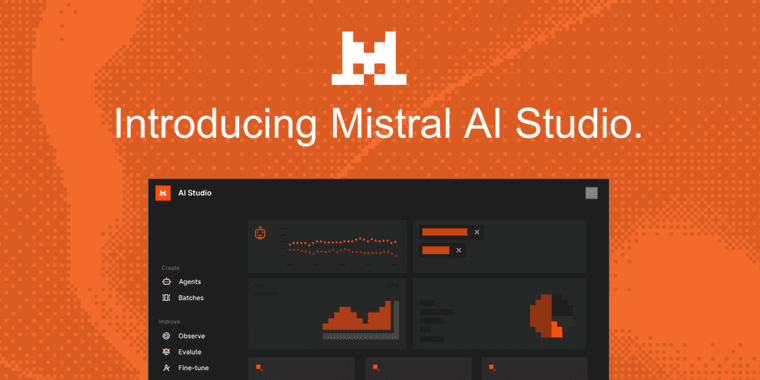
Mistral AI Studio launches as a comprehensive web platform for enterprise AI development, utilizing both proprietary and open-weight models for the full application lifecycle.
Platform Architecture and Core Features
The platform is built on observability for monitoring and evaluation, and agent runtime powered by Temporal for durable workflows, supporting AI chatbots and AI agents and assistants with complex task handling.
Model Catalog and Development Tools
Mistral AI Studio offers a diverse model catalog including Mistral Large, Mixtral models, Pixtral, Voxtral, and Codestral. Integrated tools like Code Interpreter and Web Search facilitate multimodal workflows and AI writing tools, with features for AI model hosting and customization.
Pros and Cons
Advantages
- Comprehensive open-weight and proprietary model catalog
- Enterprise-grade observability and governance features
- Durable agent runtime for complex workflows
- Multiple deployment options including self-hosting
- Integrated safety filters and compliance tools
- Developer-friendly dashboard and playground
- Support for multimodal AI applications
Disadvantages
- Currently in private beta with limited access
- Enterprise focus may limit individual developer use
- Migration required from previous platform version
- Learning curve for advanced observability features
Conclusion
Mistral AI Studio represents a significant step in enterprise AI, combining open models with robust observability and governance, making it a strong competitor in the AI APIs and SDKs market for various domains like conversational AI tools.
Frequently Asked Questions
What is Mistral AI Studio?
Mistral AI Studio is a web-based enterprise platform for building, observing, and deploying AI applications using both proprietary and open-weight models, replacing the previous Le Platforme API hub with expanded capabilities.
What models are available in Mistral AI Studio?
The platform offers Mistral Large, Mixtral 8x7B, Mixtral 8x22B, Pixtral multimodal, Voxtral speech, and Codestral code generation models, providing diverse options for different AI applications.
When did Mistral AI Studio launch?
Mistral AI Studio entered private beta on October 24, with early access currently available to enterprise customers before broader public release.
What are the key features of Mistral AI Studio?
Key features include advanced observability for monitoring AI performance, durable agent runtime for workflows, a comprehensive model catalog, and integrated development tools for various AI applications.
How does Mistral AI Studio support enterprise AI governance?
It provides enterprise-grade observability, safety filters, compliance tools, and governance features to ensure reliable and secure AI deployment and management.
Relevant AI & Tech Trends articles
Stay up-to-date with the latest insights, tools, and innovations shaping the future of AI and technology.
Stoat Chat App: Complete Guide to Revolt Rebranding and Features
Stoat chat app rebranded from Revolt due to legal pressures, maintaining all user data, features, and privacy focus without any required actions from existing users for a seamless transition.
Zorin OS 18: Modern Linux OS with Windows App Support & New Features
Zorin OS 18 is a Linux distribution with a redesigned desktop, enhanced Windows app support, and web apps tool, ideal as a Windows 10 alternative with long-term support until 2029.
AV Linux 25 & MX Moksha 25 Released with Enhanced File Manager & VM Features
AV Linux 25 and MX Moksha 25 are new Linux releases based on Debian Trixie, featuring enhanced file management with Quickemu and YT-DLP integration, tailored for multimedia production and lightweight computing.